


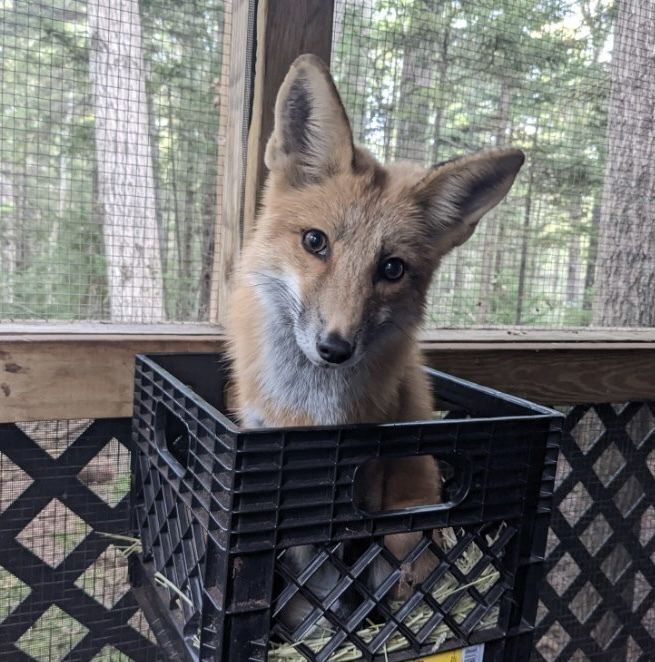
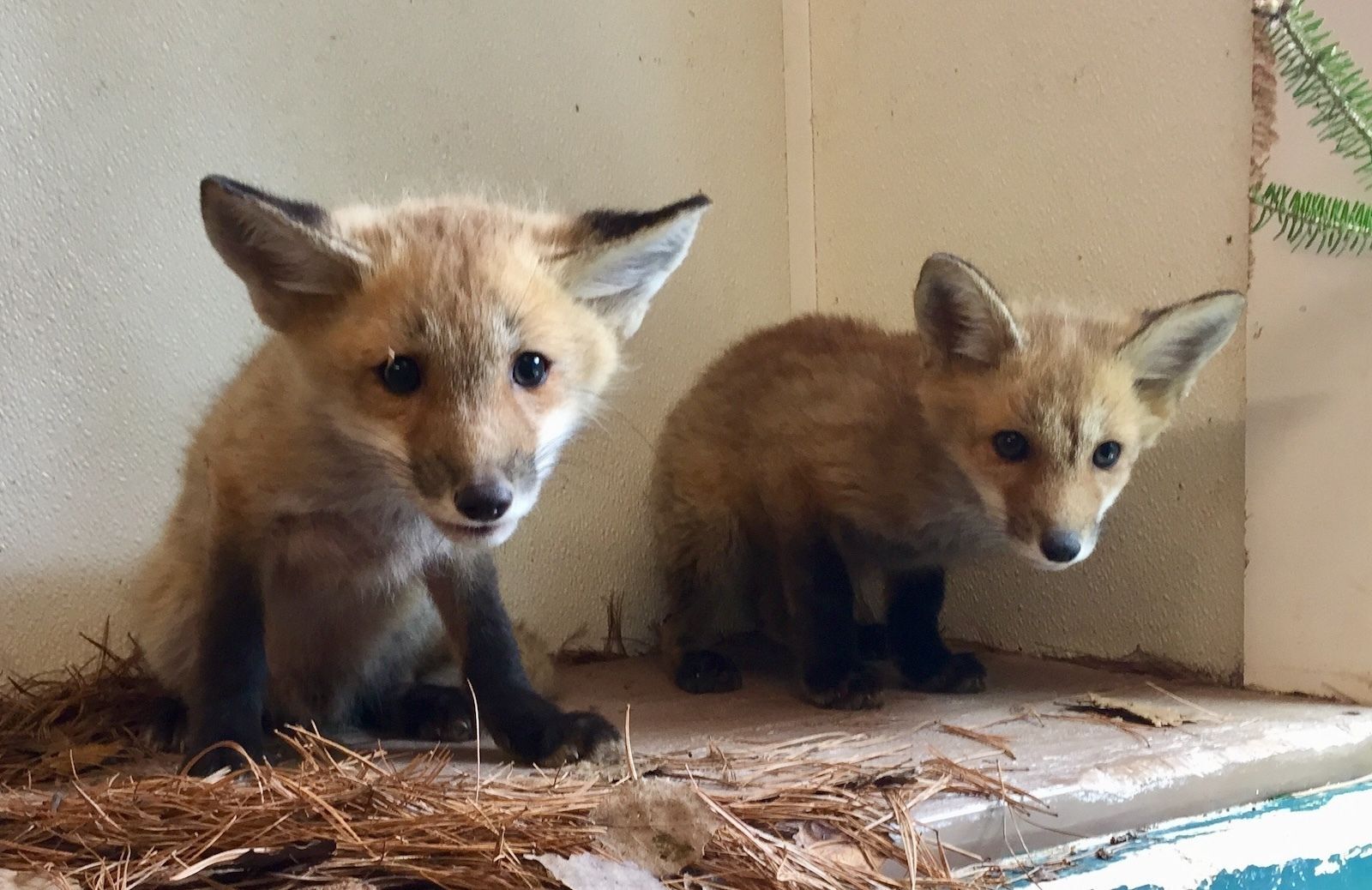
“Jax” our Red Fox came to our clinic in 2022 as an eight-week-old kit, found alone in the middle of a road. He did not seem injured, but eight-week-old kits are meant to be in their dens with both parents watching closely. He had nobody. Later that spring we got another kit of the same age that was very injured from a hit to the head by a car. That one took much of our concentration as he couldn’t move or see or feed himself. Jax danced around in the background, looking very healthy but at the same time too friendly with us.
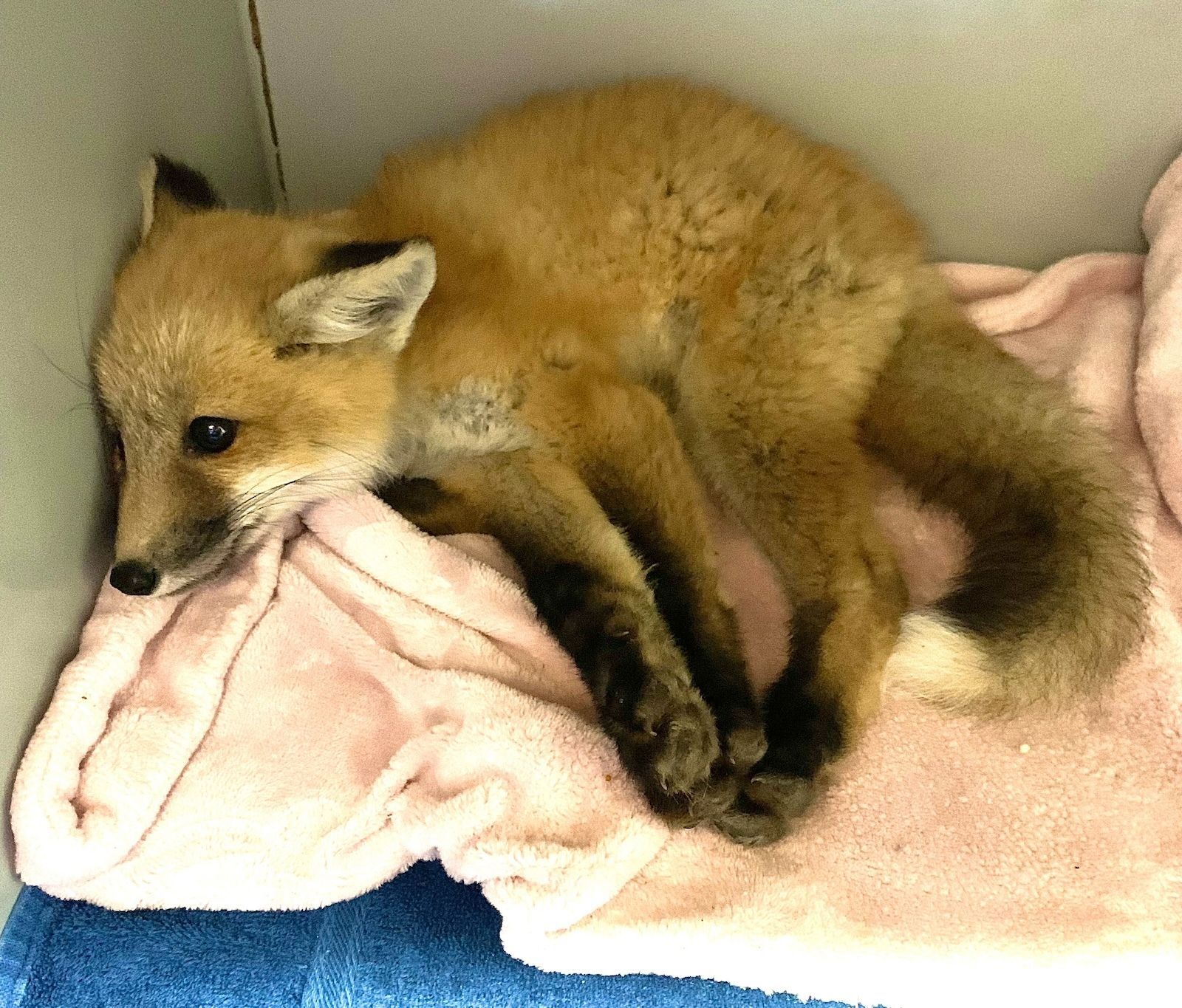
Gradually the injured kit improved until we were able to put both outside. We then noticed that Jax was awfully friendly. All fox kits in our outside cage run for cover when we come to clean and feed, Jax wagged his tail and tried to play with us. Something was wrong. We ignored his overtures all summer hoping that his time with his adopted sibling would solve the problem, but it did not. The lack of wild instincts is a sign of a permanent head injury and combines with lack of fear, lack of hunting instincts, and lack of territorial instincts, all vital behaviors. He did not get tame because of us, but he stayed tame despite our efforts.
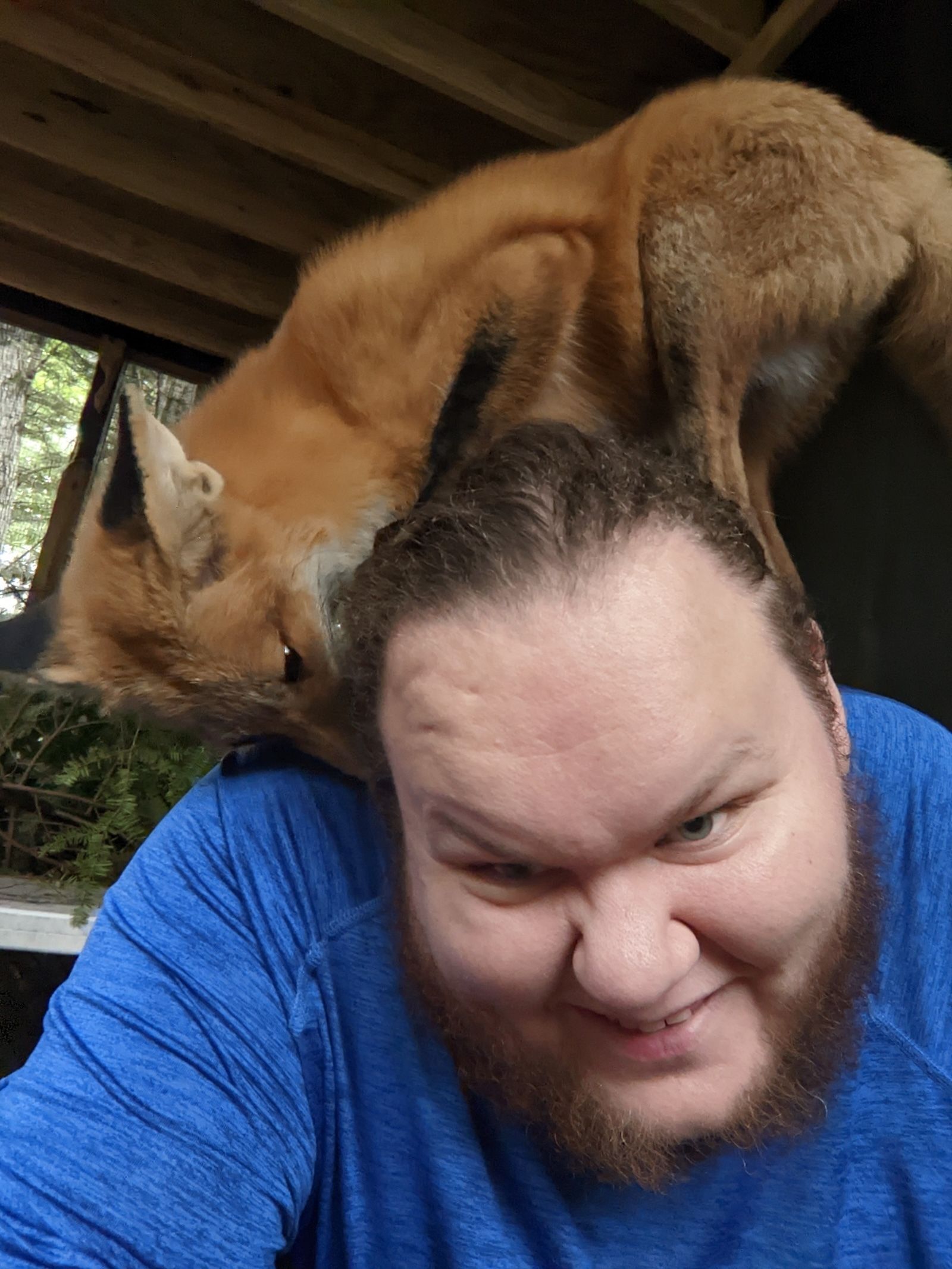
Finally at six months we released his companion and decided that he was non-releasable. This is very rare behavior, but unfortunately these types of non-releasable animals make good ambassadors so this story is one shared by others in our nature center. I have cared for several young foxes who were kidnapped from their families and made into pets, but always I was able to get them wild again. Jax has a head injury so will never recover his wildness.
Ambassadors that are tame require a great deal of enrichment, especially a Red Fox which is highly intelligent and busy. He is extremely popular in our program and the public learns wild fox behavior by watching him stash his toys, pounce on leaves they way he would pounce on prey, manipulate his environment. Wild foxes have both parents to raise their kits. The male brings food to his mate while she is nursing young. Foxes are known to hide food when times are good, for times when food is lean, especially Arctic Foxes. When the young are old enough, they follow their parents, learning hunting techniques, and in winter this requires crazy high pounces coming straight down into the snow after a rodent. As with many young animals, play turns into survival skills and we can observe a lot of this with Jax.
